Laser Welding - Lithium ION Battery Tray & Lithium ION Battery Box
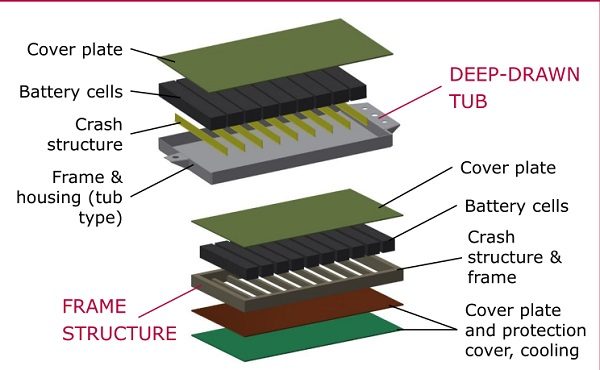
Battery tray welding and battery box welding are both crucial applications of laser welding technology in electric vehicles (EVs). They play a vital role in assembling the battery pack, which is the heart of an EV and stores the energy that powers the vehicle.
Here’s a breakdown of each application:
Battery Tray Welding:
Function: The battery tray is a metal frame that physically houses and supports the battery pack within the EV. It provides structural integrity and protects the battery from impacts and vibrations. Battery tray welding involves joining various metal components of the tray, such as sheets, brackets, and reinforcements. Generally, these trays are made up of Aluminium 6XXX series owing to its light weight and sufficient strength to support the battery pack. However, welding aluminium comes with its challenges which gives rise to demand of a suitable process which could satisfy the requirements.
Industries are exploring Laser Welding as it is an effective solution and has many benefits.
Benefits of Laser Welding:
Precision: Allows for precise welds with minimal heat distortion, ensuring a perfect fit for the battery pack and preventing stress points.
Strength: Creates strong and reliable welds that can withstand the rigors of everyday driving.
Speed: Offers faster welding speeds compared to traditional methods like resistance welding, leading to increased production efficiency.
Clean Welds: Minimizes heat input, resulting in clean welds that are free of spatter or oxidation, which can be detrimental to the battery’s performance.
Battery Box Welding:
Function: The battery box is a sealed enclosure that houses the entire battery pack. It provides protection from the environment, such as dust, moisture, and debris. Battery box welding involves joining the various parts of the enclosure, typically made of sheet metal, to create a leak-proof and secure container.
Benefits of Laser Welding:
Airtight Seals: Provides precise and clean welds that create airtight seals, preventing moisture ingress and ensuring long-term battery performance.
Strength and Rigidity: Creates strong welds that contribute to the overall rigidity and durability of the battery box.
Reduced Heat Distortion: Minimizes heat input, preventing warping of the box components and ensuring proper fit.
Versatility: Can be used to weld various materials commonly used in battery boxes, including different types of steel and aluminum.
Overall, both battery tray welding and battery box welding are essential for the safe, reliable, and efficient operation of EV batteries. Laser welding technology offers a compelling solution for these applications due to its precision, speed, clean welds, and minimal heat impact.
Generally, Battery trays and battery boxes are made of Al 6XXX series because of its desirable properties, but welding Al 6XXX series has some challenges:
– Porosity – Cracking
To mitigate these problems, a filler wire os material suitable according to requirement is used.
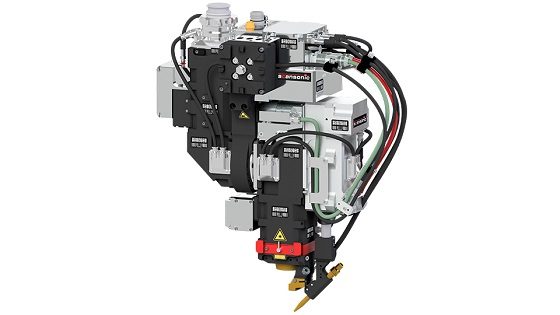
Scansonic ALO4 Optics is suitable for Laser Welding with filler wire due to its following features:
– Swivel Axis which enables processing on complex geometries – Auto focus – Tactile Seam Tracking